Knots the Sea to Table
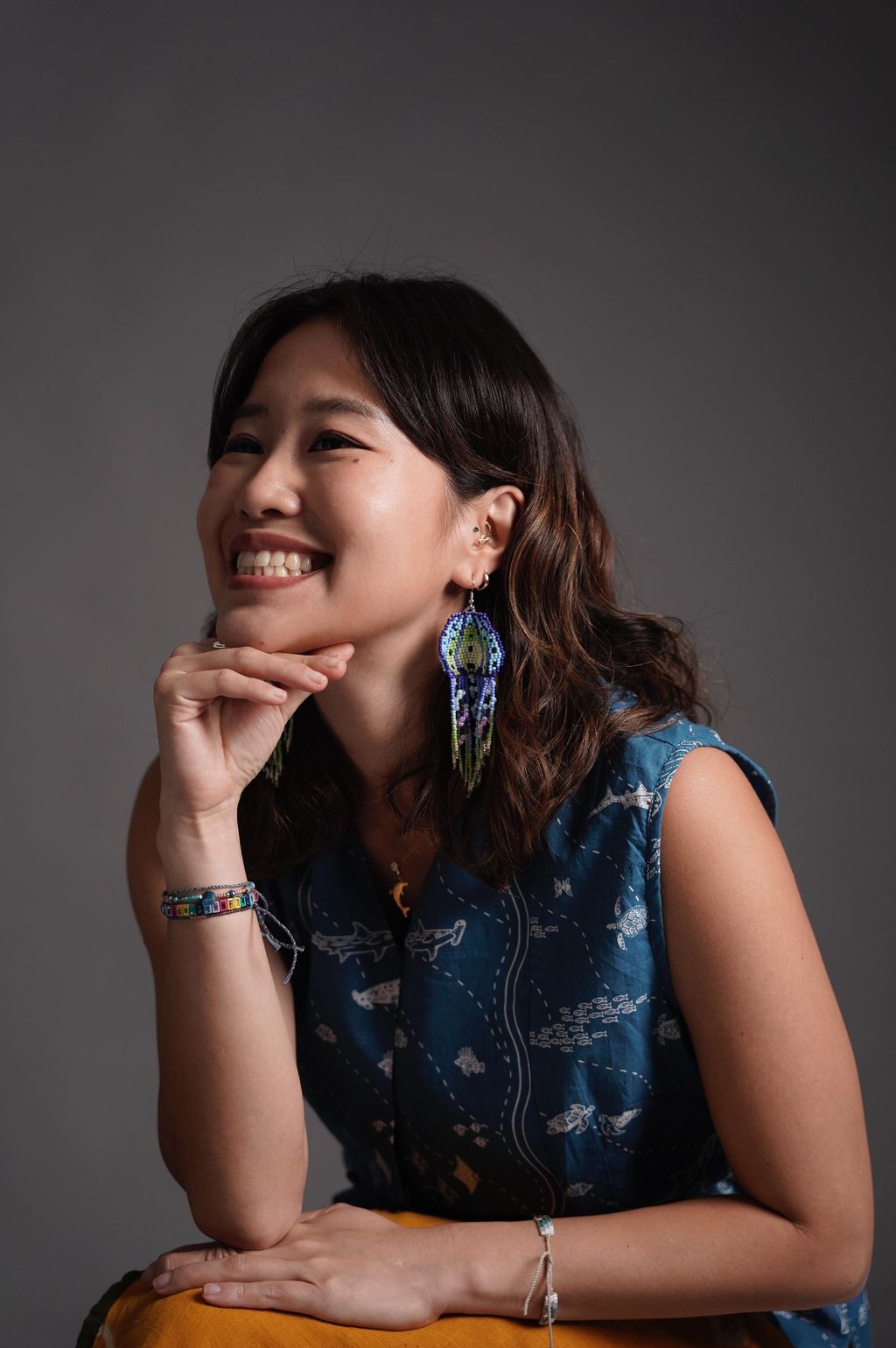
Artist — Elle Wibisono
The aim of this mural is to call attention to the primary goal of fisheries management: sustainability. In practice, that means confronting the harmful practices associated with the fishing industry. As consumers of seafood, there are many factors we should consider when deciding to purchase it, for example, how the fish is caught and whether safe, humane, and environmentally sensitive protocols are followed.
This mural visually captures diverse images connected to the seafood supply chain. As a fishery scientist, it’s often challenging to convey the complexity of this supply chain and the need for greater transparency within it. The Outlaw Ocean Mural Project allowed me to illustrate these concepts on a painted surface. My hope is to motivate passersby to ask questions: where does our fish actually come from? Are all parts of the supply chain functioning ethically? In turn, the mural may spark a larger conversation that leads to change.
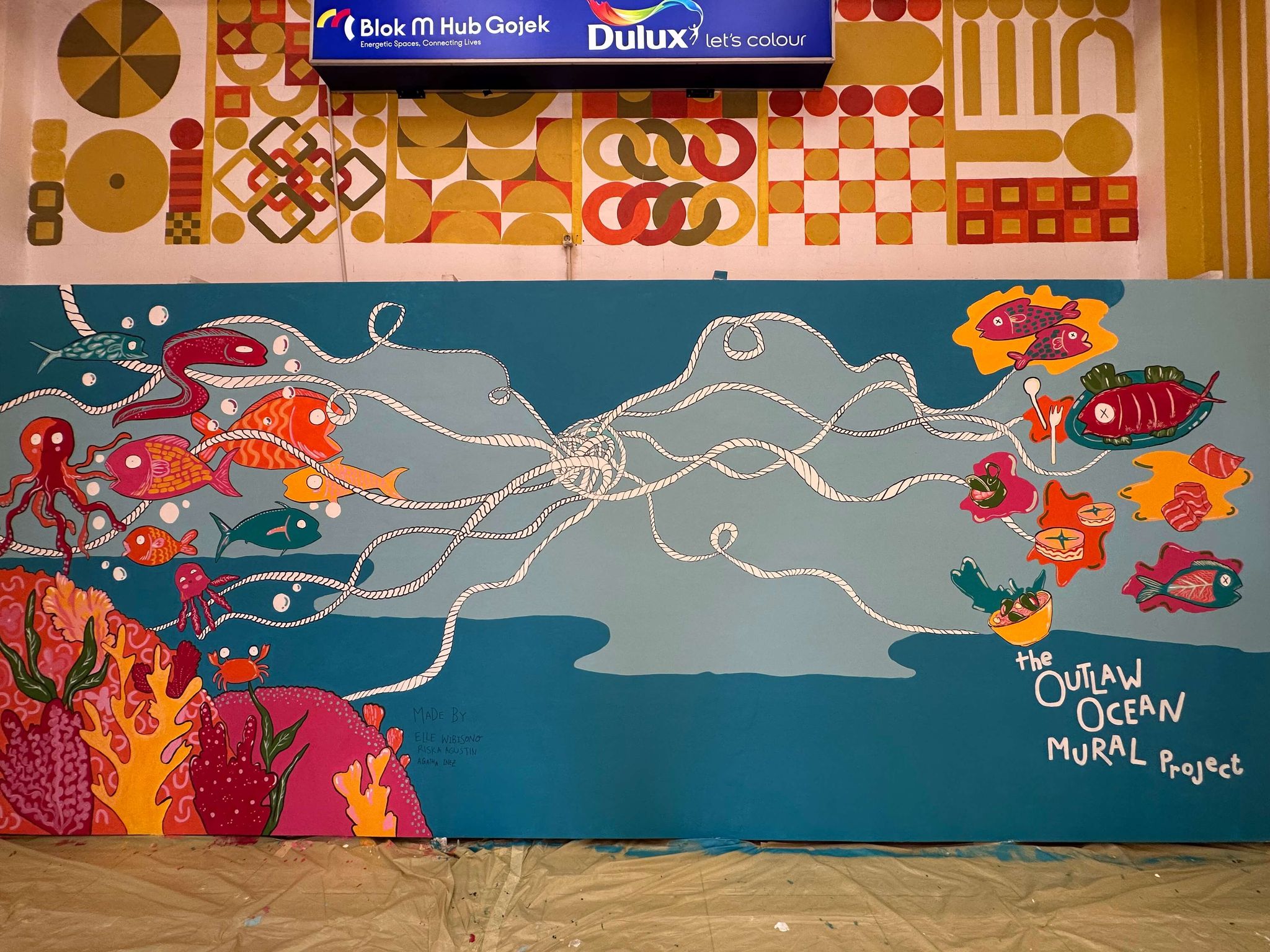
MURAL LOCATION — Jakarta, Indonesia
Artist Bio —
Elle Wibisono believes science only matters if it reaches people — and that comics, illustration, and storytelling can carry scientific ideas further than a paper ever could. She trained as a fisheries scientist, with a PhD from the University of Rhode Island, fieldwork on Indonesia's deep-water snappers, stints with Conservation International, Konservasi Indonesia, and a NOAA Knauss Fellowship. She has spent just as much energy figuring out how to make that science land: how to turn data into something people feel, remember, and act on.
Elle is the creator of Fishtory, a comics platform using art to convey fisheries science and spark behavior change, and author of A Snapper Tale, an illustrated children's book about the deep-water snappers she once studied. She also writes “Below the Surface,” a science-policy column for Science Politics magazine, connecting research to real-world impact.
She now serves as Technical Director of the Blue Lab at Georgetown University's School of Foreign Science Asia Pacific (GSAP) in Jakarta — work that led her to Suara dari Muara (Voices from the Estuary), a photovoice exhibition at Museum Bahari amplifying the voices of women from the Muara Angke fishing community, and the stories gathered here.